


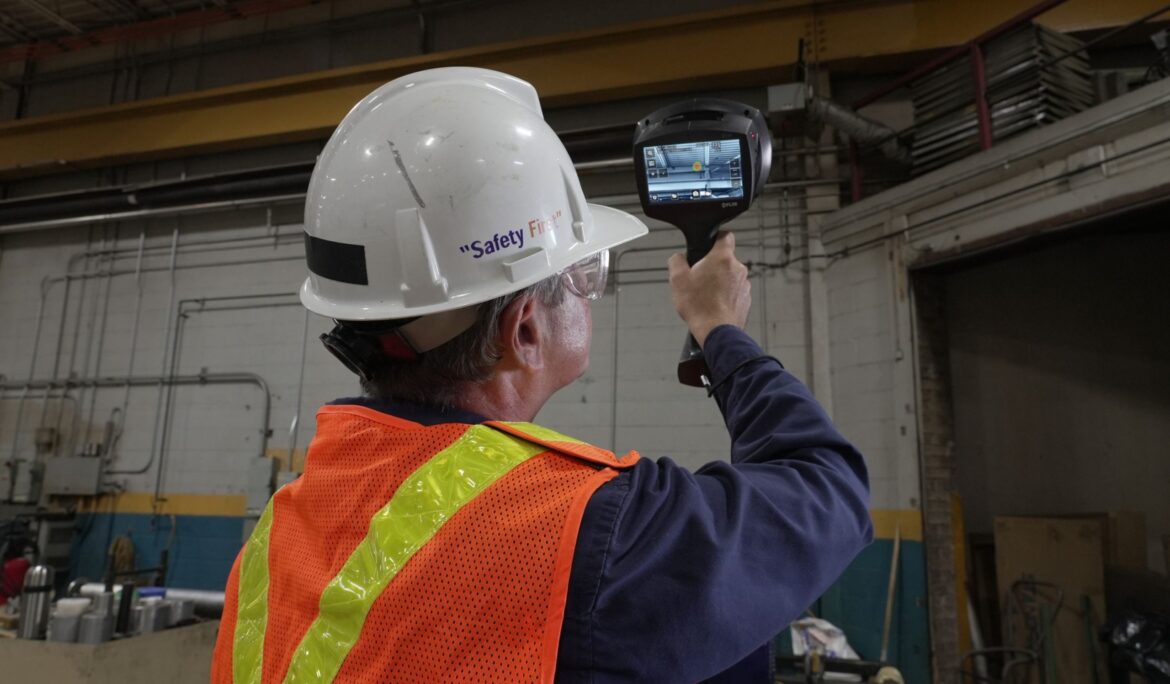
Role of Acoustic Detections in Preventive Maintenance!!
In the realm of engineering and maintenance, the early detection of potential issues is key to ensuring reliability, efficiency, and safety. Among the various techniques employed, acoustic detection stands out as a powerful tool in preventive maintenance strategies. This approach leverages the sounds produced by machinery and equipment to identify anomalies that could indicate mechanical issues. Here’s how acoustic detection is revolutionizing preventive maintenance: Understanding Acoustic Detection Acoustic detection involves the monitoring of noise, vibration, and other acoustic signals emitted by machinery during operation. By analyzing these sounds, maintenance teams can identify irregular patterns that precede mechanical failures. This method …

Optimizing Electrical Safety: Innovative Earthing Strategies for Hazardous Areas in India’s Manufacturing Sector
Introduction: In the complex landscape of the Indian manufacturing industry, which spans sectors like chemicals, petrochemicals, pharmaceuticals, and power generation, the implementation of advanced earthing systems in hazardous areas is paramount. Hazardous areas, characterized by the potential presence of flammable gases, vapors, or dust, necessitate earthing systems designed to mitigate the risk of ignition and ensure the safety of both personnel and equipment. This technical discourse delves into the sophisticated earthing practices essential for hazardous zones, aligning with Indian and international standards for engineering departments tasked with safeguarding operational integrity. Fundamentals of Earthing in Hazardous Areas: Earthing, the process of …

Mastering Industrial Efficiency: Unlocking the Potential of Acoustic Leak Detection Technology!!
The pursuit of operational excellence in industrial domains—ranging from power generation to pharmaceuticals—demands a relentless focus on minimizing downtime and optimizing system reliability. A critical yet often underappreciated aspect of achieving these goals lies in the advanced maintenance techniques like acoustic leak detection (ALD). This blog presents a deeper technical dive into ALD, unraveling its principles, technological nuances, and strategic implementation to underscore its value in bolstering industrial efficiency and resilience. Technical Foundations of Acoustic Leak Detection Acoustic Leak Detection operates on the premise that leaks from pressurized systems emit unique acoustic signatures due to the turbulent flow of …

Overcurrent Protection Strategies for Industrial Safety: A Detailed Technical Perspective!!
In industrial environments, electrical safety hinges on effectively managing overcurrent situations. Engineering departments in manufacturing facilities must prioritize overcurrent protection not just for compliance, but for safeguarding equipment and personnel. This blog offers a detailed look at the technical aspects of overcurrent protection, emphasizing its critical role in industrial safety. Understanding Overcurrent Overcurrent is a condition where the electrical current surpasses the rated capacity of a system’s components, leading to potential hazards. It can manifest in various forms: 1. Overloads: Occur when equipment draws more current than its rated capacity over a period, often due to mechanical overload, incorrect operation, …
Electrifying Safety: Advanced Strategies for Eliminating Workplace Electrical Hazards!!
Mitigating electrical hazards requires a comprehensive approach that encompasses regular inspections, preventive maintenance, and rigorous safety protocols. Here’s a more technical look at these strategies: 1. Comprehensive Electrical Safety Audits: Conduct thorough inspections focusing on the integrity of insulation, grounding systems, and protective devices. Use infrared thermography to detect overheating components, which are indicative of potential electrical failures. Perform earth loop impedance testing to ensure that protective devices (like circuit breakers) will operate correctly under fault conditions. Implement regular Arc Flash Hazard Analysis to assess the potential for arc flash incidents and determine appropriate safety measures. 2. Rigorous Preventive …

Enhancing Energy Efficiency in Manufacturing: The Power of Load Flow Analysis!!
In the competitive world of manufacturing, managing energy efficiently is pivotal for both cost-effectiveness and environmental sustainability. This comprehensive blog delves into how load flow analysis, a cornerstone of electrical engineering, significantly contributes to identifying energy-saving opportunities in manufacturing facilities. Understanding Load Flow Analysis: Load flow analysis is essential for analyzing the distribution of electrical currents and voltages in a power system. It provides invaluable insights into how energy is utilized within a facility, highlighting areas of inefficiency and potential improvement. Benefits of Load Flow Analysis: 1. Optimized Power Distribution: Effective Load Management: By analyzing power distribution, facilities …

Optimizing System Safety: Advanced Fault Analysis in Protective Device Coordination for Industrial Applications!!
In the high-stakes realms of the Pharmaceutical, Oil & Gas, Chemical, and Petrochemical industries, the meticulous coordination of protective devices is non-negotiable. This coordination is largely dependent on the nuanced process of fault analysis – a cornerstone in maintaining electrical system integrity and operational efficiency. For professionals operating in these sectors, a deep understanding of fault analysis is not just beneficial, but essential. Understanding Fault Analysis Fault analysis is the backbone of electrical safety and efficiency in industrial settings. It involves the identification and examination of abnormal electrical conditions – such as overcurrents or voltage imbalances – that can …

Advanced Insulations: The Pathway to Energy Conservation in Manufacturing Industries!!
Manufacturing industries, energy efficiency is not just a cost-saving measure; it’s a crucial aspect of sustainability and competitive advantage. As engineering design consultants, we recognize the significant role advanced insulations play in this arena. These innovative insulation solutions are redefining energy conservation strategies in the manufacturing sector. The Shift to Advanced Insulation Materials Traditional insulation materials like fiberglass and mineral wool have been industry standards for years. However, they often fall short in high-performance applications, particularly in manufacturing environments with extreme temperatures or space constraints. Advanced insulation materials, such as aerogel, vacuum insulated panels (VIPs), and phase-change materials (PCMs), …

Strategic Timing for Load Flow Analysis: Maximizing Efficiency Across Industries!!
In the realm of electrical power systems, maintaining optimal performance and reliability is a constant challenge. One of the most effective tools in achieving this is load flow analysis. This blog delves into how load flow analysis can significantly enhance maintenance strategies, ensuring power systems operate efficiently and reliably. Understanding Load Flow Analysis: Load flow analysis, also known as power flow analysis, is a fundamental method used in electrical engineering to determine the flow of electrical power in a transmission network. It involves calculating voltage drops, current flows, and power losses in each part of the system under different …

Electrical Safety Audit for Smart Grids and Microgrids: Enhancing Reliability and Safety!!
The evolution of power distribution through smart grids and microgrids promises enhanced efficiency and renewable energy integration. However, this technological advancement brings complexities that necessitate rigorous electrical safety audits. These audits are crucial for verifying the integrity, safety, and compliance of these advanced power systems. Understanding Electrical Safety Audits: An electrical safety audit in the context of smart grids and microgrids is a comprehensive evaluation. It encompasses not just the hardware but also the software components and operational procedures. This holistic approach is vital in addressing the unique challenges posed by these technologically advanced systems. The Necessity of …