


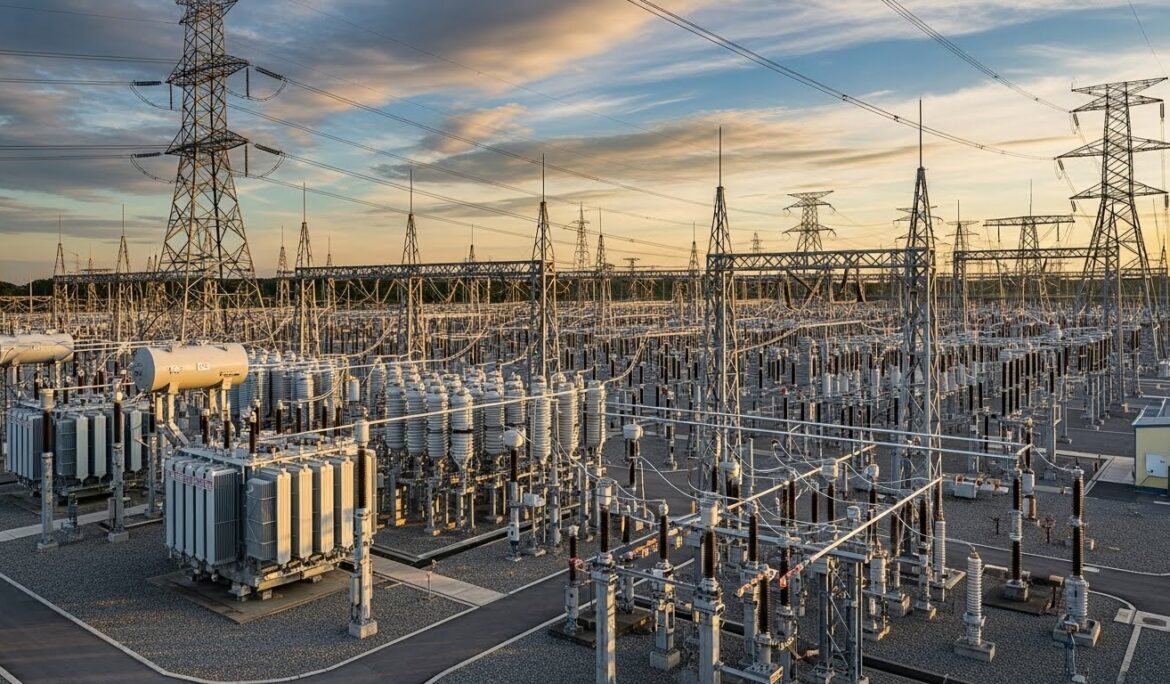
The Hidden Design Assumptions That Cause Switchyard Substation and Transmission Line Failures Years After Commissioning
Switchyard substations and transmission lines are typically designed in strict adherence to IEC, IEEE, IS, and utility-specific standards. On paper, these designs are compliant, approved, and ready for execution. Yet in practice, many such systems experience: Recurrent outages Insulation and protection issues Operational inflexibility Premature performance limitations This raises an important question for designers and utilities alike: Why do technically compliant designs still struggle under real grid conditions? This article explores that gap focusing on engineering judgment beyond standards, and on the design considerations that directly influence long-term reliability and grid performance. Standards Define the Framework Engineering Defines Performance Electrical …

Clarifying Key On-Site Activities in Engineering Projects: Supervision, Audits, Inspections, and Testing!!
Engineering projects involve a range of critical on-site activities, all of which require the coordination of different stakeholders. These activities Supervision, Audits, Inspections, and Surveys/Measurements/Testing are vital to ensuring projects are completed on time, meet design and safety standards, and comply with all relevant regulations. However, confusion often arises about the exact responsibilities and roles involved in each of these tasks. This blog aims to clarify these activities and provide a technical perspective on the workflow at engineering project sites. 1. Supervision Supervision is a continuous, on-site activity that focuses on ensuring the project is executed according to established design, …

All about Inspection & Test Planning!!
An Inspection Test Plan (ITP) is a document used in engineering and construction projects to outline the process and criteria for inspecting and testing specific components or aspects of a project. The primary purpose of an Inspection Test Plan is to ensure that the project meets the specified quality standards and that the work is performed in accordance with the project requirements, design specifications, and applicable codes and standards. Key components of an Inspection Test Plan typically include: Scope of Work: Clearly defines the scope of the inspection and testing activities. It outlines what specific components, materials, or …

The Crucial Role of Third-Party Inspection in Engineering Projects: Ensuring Quality, Compliance, and Success
Third-party inspection involves a comprehensive set of activities and processes carried out by an independent inspection agency or individual to assess various aspects of a project, product, or service. The specific tasks and activities conducted during third-party inspection can vary depending on the nature of the project, industry, and the agreed-upon scope of work. However, here are some common activities that are typically performed under third-party inspection: 1. Documentation Review: Reviewing project documentation, including design specifications, quality control plans, and relevant standards and regulations, to ensure that the project is planned and executed in compliance with the required standards …

What’s the Procedure for Relay Testing in an Electrical Substation?
The electrical substation is crucial to electrical distribution, generation, and transmission. One of its critical tasks is to step down the voltage in transmission lines to ensure the voltage’s suitability and safety for the distribution grid. Substation design services can help test your system to ensure a well-planned layout that can increase safety and prevent unwanted accidents. About relay testing Relay testing an electrical substation ensures an accurate and efficient system. Service providers conduct relay testing based on the system’s function, size, and design. They test relays to ensure proper connections and verify the correct settings on the relays for correct functioning. …