
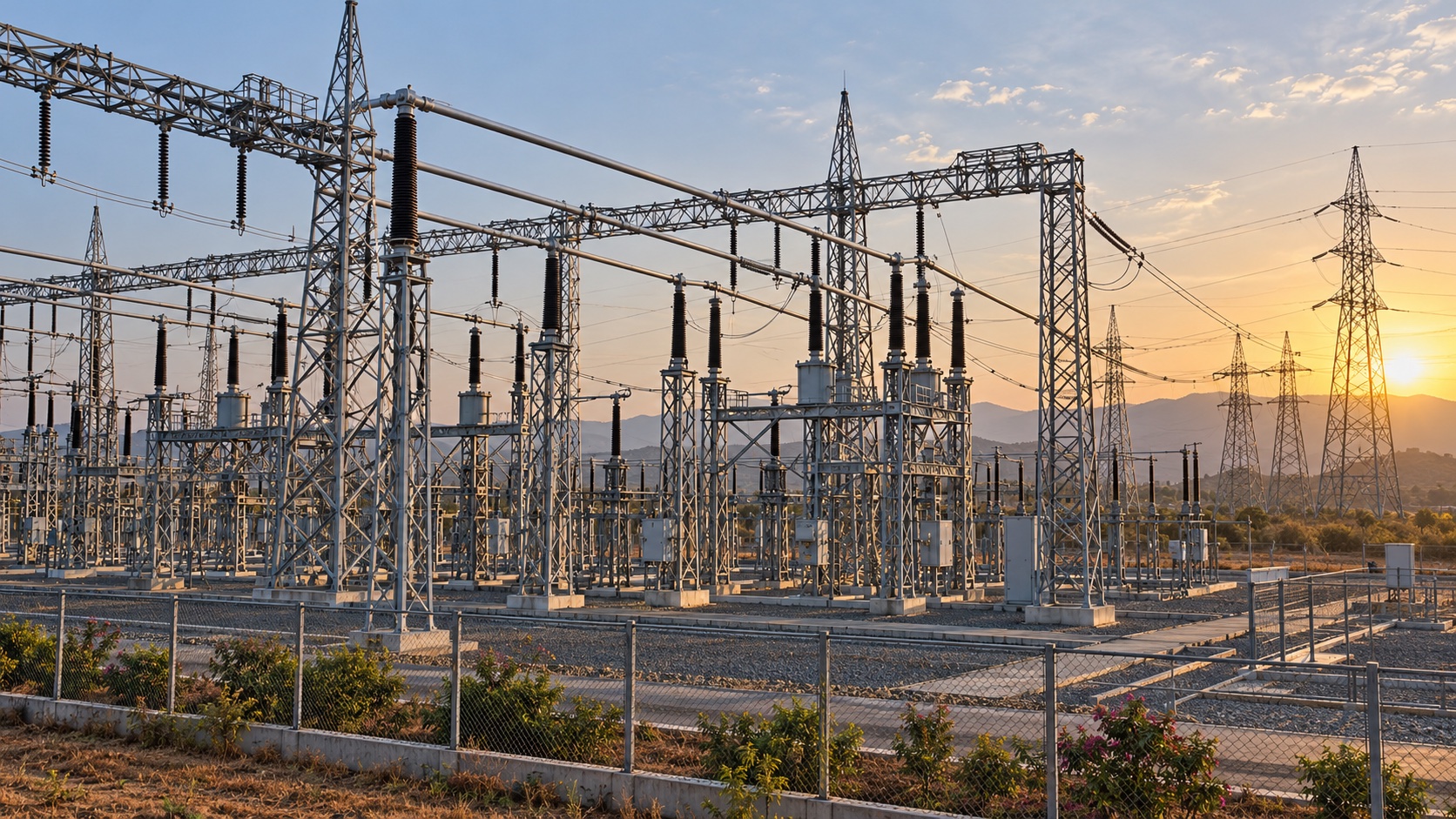
Tariff-based competitive bidding (TBCB) selects a transmission service provider through competition for the transmission charge. It does not replace the engineering rules that make the asset safe and fit for the grid. The selected provider must still satisfy the applicable Central Electricity Authority (CEA) regulations, grid code, technical specification, approvals and transmission service agreement (TSA). The commercial model can, however, change which compliant design choices make the most sense over the asset’s operating life.
What is actually bid?
For an Indian inter-state transmission project tendered under the TBCB route, the bidding framework operates under Section 63 of the Electricity Act, 2003. The bid process coordinator sets out the project scope and bidding documents. In a published Ministry of Power project RFP and TSA, bidders quote a single annual transmission charge for a 35-year period. The selected bidder acquires the project company, develops the specified assets and provides transmission service under the TSA. The project's licence and agreement define its obligations; a 35-year term in one set of documents should not be assumed for every future tender.
The price competition is real, but it is inaccurate to say that bidders offer “no design.” The RFP already contains technical scope and minimum requirements, while the provider completes surveys and detailed engineering and may choose among compliant equipment, layouts, construction methods and maintenance strategies. Those choices affect cost and reliability. They cannot override the mandatory design basis or an explicit tender requirement.
What engineering requirements remain?
A substation or line must be designed for the network and site where it will operate. The procurement route does not lower the prospective short-circuit duty, make unsafe touch voltage acceptable, or remove the need for insulation coordination and protection studies. For an Indian project, the working design basis typically brings together:
- the applicable CEA construction standards and amendments, safety regulations and grid code;
- the RFP/TSA technical schedules and the connecting utility’s requirements;
- measured or validated site and system inputs, including fault levels, soil conditions, route, environmental loading and future network changes; and
- the relevant Indian Standards and any IEC or IEEE standards called up by the specification.
The resulting calculations may cover equipment short-circuit withstand, clearances and insulation, earthing step and touch potential, relay selectivity, communication and SCADA, line loading and structural foundations. The correct ratings and settings are project-specific. A generic “400 kV fault level” or lightning impulse value cannot safely stand in for a study or an approved specification.
The RFP example itself references the CEA’s 2022 construction regulations for its transmission lines and requires quality and equipment compliance for a long service life. It also assigns the provider responsibility for operation and maintenance under the relevant CEA and regulator rules. Those technical duties remain even though the charge was won competitively.
Where TBCB does influence design decisions
TBCB can sharpen the trade-off between capital cost, delivery risk and decades of maintainability. A cheaper arrangement that makes a bay difficult to isolate may increase future outage exposure. A route chosen from incomplete ground information may create foundation or right-of-way cost later. Protection or monitoring options that improve fault isolation and diagnosis may deserve more attention when service availability affects payment.
That does not mean every TBCB project needs the same single-line diagram as a regulated project, or that every extra redundancy feature is justified. The correct comparison is between options that all meet the project’s technical and contractual requirements. The engineering team should test each option against reliability studies, maintainability, constructability and whole-life cost—not procurement shorthand.
For the practical design decisions behind this, read Why Availability Matters to TBCB Transmission Design. If you work across jurisdictions, Transmission Procurement Models Worldwide explains which foreign terms are comparable and which are not.
A useful bid-stage checklist
Before fixing a transmission charge, ask whether the team has a defensible basis for the network studies, substation arrangement, line route, geotechnical conditions, earthing, construction programme and operating strategy. Record assumptions that cannot yet be confirmed and the cost or schedule sensitivity of each. The bid should price a buildable, operable asset—not only a bill of materials.
Frequently asked questions
Does TBCB relax technical standards to produce a lower tariff?
No. The winning provider must deliver the specified project under the applicable rules and agreement. Competition is over the service charge and the provider’s ability to deliver within those obligations.
Is the lowest-capital-cost compliant design automatically the best bid design?
No. The provider also bears construction, operation and maintenance obligations. Reliability, access for maintenance, outage exposure and lifecycle cost can change the preferred option.
Is every TBCB transmission concession 35 years?
No universal term should be inferred from the acronym. The cited Indian project documents use 35 years; always read the current project RFP and TSA.
Explore related Elegrow services
- Substations, Lines & Grids — see the assets and engineering stages.
- Engineering Design — substation, line and structural design support.
- Power System Studies — short-circuit, protection and network analysis.
Discuss a transmission project: Share the asset, location and stage with Elegrow.