



BESS Grid Integration Studies: How to Verify Grid Stability, Security and Reliable Energy Delivery Before Procurement
A practical guide for developers and EPCs to define BESS grid-study scope, assess stability and security needs, and align supplier guarantees with commissioning tests. …
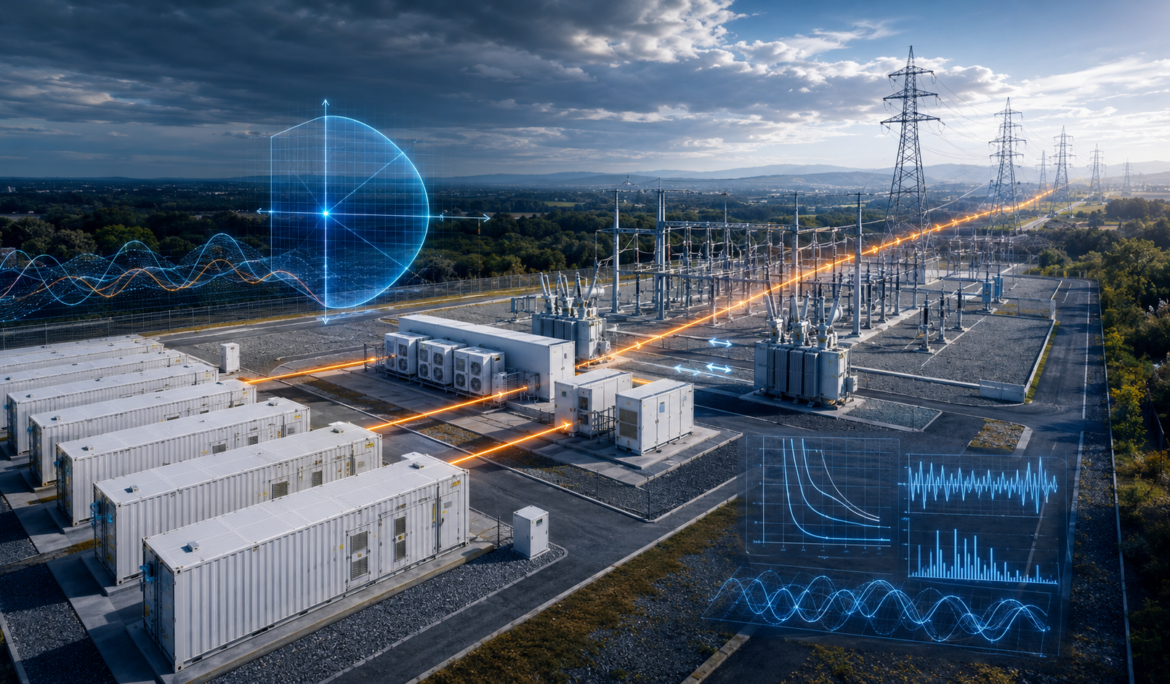
Why BESS Interconnection Studies Get Rejected—and What Reviewers Expect Instead!!
A BESS Interconnection Study Doesn’t Get Rejected at Random MISO’s queue holds roughly 50 GW of BESS capacity inside a 650 GW total backlog. PJM and CAISO show comparable ratios. FERC Order No. 2023 fixed the process side. It created first-ready, first-served cluster studies, set tighter statutory timelines, and let co-located storage and generation share one interconnection request at a single point of interconnection. It didn’t fix the technical quality of what developers submit. A restudy trigger doesn’t care how good the cluster study framework is. It cares whether the fault current model, protection scheme, and dynamic voltage data hold …

Battery Storage Grid Connection: 5 Checks for Developers and EPCs
Five practical checks help battery storage developers and EPCs align operating plans, grid requirements, equipment and acceptance evidence before design freeze. …

Solar Cleaning Robots Are Market-Ready. Is Solar Infrastructure Ready for Them?
Introduction: The Shift from Technology to Execution Solar cleaning robots are no longer an emerging technology. They are already deployed across utility-scale and rooftop solar projects, delivering measurable improvements in operational efficiency and energy yield. The conversation in the solar industry, however, is still disproportionately focused on which robot to deploy, rather than whether the infrastructure can support automation effectively. As robotic cleaning becomes mainstream, infrastructure readiness has emerged as the real performance differentiator. In markets like India, where site conditions vary widely, the success of solar cleaning robots depends less on technology capability and more on how well ground-mounted …

Grid Impact Studies for Renewable & Industrial Connections in Saudi Arabia and the USA
A Practical Guide with DIgSILENT PowerFactory As renewable energy, battery storage, and large industrial loads accelerate across Saudi Arabia and the United States, grid connection is no longer a formality, it is a technical and regulatory bottleneck. Utilities and system operators now require comprehensive Grid Impact Studies (GIS) before approving any new connection to transmission or distribution networks. To meet these expectations efficiently and credibly, engineering teams are increasingly standardizing on DIgSILENT PowerFactory a proven platform for utility-grade power system studies across renewables, BESS, and industrial facilities. This guide explains what Grid Impact Studies involve, how requirements differ between Saudi …

Digital Twins in Energy Asset Management: Redefining Reliability and ROI!!
Energy companies are under constant pressure to improve reliability, reduce downtime, and cut lifecycle costs. Traditional monitoring tools often reveal failures after they occur. A Digital Twin changes that paradigm. By creating a virtual replica of energy assets—from transformers and switchgear to BESS and microgrids—digital twins enable real-time monitoring, predictive maintenance, and performance optimization. For industries like oil & gas, utilities, pharma, and data centres, digital twins are fast becoming essential to remain competitive and compliant. What is a Digital Twin in Energy Asset Management? A Digital Twin is a data-driven simulation model that continuously updates using IoT sensors, SCADA …

The BESS Failures No One Sees Coming – Until It’s Too Late!!
Battery Energy Storage Systems (BESS) are critical to the renewable energy transition, enabling grid stability, peak shaving, and energy arbitrage. However, beneath the promise of reliability lies an uncomfortable truth—many BESS failures are preventable but go unnoticed until they cause costly downtime or catastrophic damage. This article explores hidden risks in BESS safety, why failures often appear “sudden,” and how engineering best practices can eliminate them. Why BESS Failures Often Go Undetected A BESS failure rarely starts with an explosion or visible fault. Instead, small issues accumulate over time—minor heat build-up, uncoordinated protection settings, or skipped DC arc flash hazard …

5 Common Solar Plant Design Mistakes That Hurt Performance and How to Avoid Them
Why Solar Design Isn’t Just About Panels and Sunshine A well-designed solar plant is a balance of efficiency, compliance, safety, and future readiness. Yet across India, many EPCs and developers face project losses due to avoidable design flaws that reduce ROI, increase downtime, or trigger grid penalties. At Elegrow Technology Pvt. Ltd., we’ve worked on over 100 design and performance optimization projects — and here are the top five mistakes we see time and again. ⚠️ 1. Improper DC:AC Ratio Selection The Mistake:EPCs often oversize or undersize the inverter in relation to the DC capacity — based on guesswork or …

Why Panel Cleaning Alone Won’t Maximize Your Solar Returns?
Many solar plant operators believe that regular solar panel cleaning is enough to maintain peak energy output. While cleaning improves short-term efficiency, it does not prevent panel degradation, inverter failures, DC cable faults, or weather-related damage. Without a strong solar asset management strategy, even spotless solar panels can underperform, leading to unexpected failures and financial losses. Why Cleaning Isn’t Enough for Long-Term Solar Performance Consider a 100 MW solar power plant located in a high-dust region. The operator uses automated robotic cleaning every week to reduce dust accumulation. After each session, the solar energy output increases by 10% to 20%. …

Why Technical Procurement Fails in Solar EPC & How to Fix It!!
Procurement in solar PV projects is not just about purchasing components; it is about ensuring that the right specifications, quantities, and delivery schedules align with execution requirements. A lack of technical competency in procurement teams and inadequate site exposure among design engineers often leads to major inefficiencies. These inefficiencies manifest as design mismatches, procurement sequencing errors, and project delays, significantly impacting project viability. Design Engineering vs. Site Reality Issue: Design engineers develop technical specifications without visiting sites, leading to impractical or incompatible requirements. Lack of understanding of panel handling, transportation constraints, and installation feasibility results in procurement errors. Incorrect specification …