


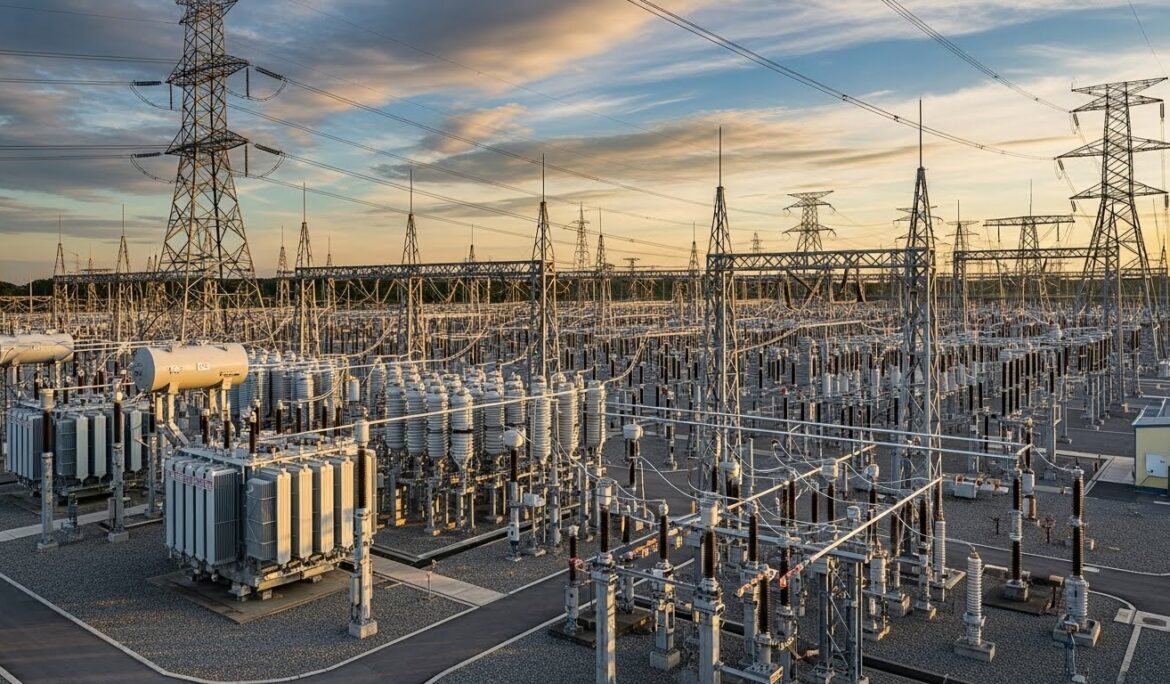
The Hidden Design Assumptions That Cause Switchyard Substation and Transmission Line Failures Years After Commissioning
Switchyard substations and transmission lines are typically designed in strict adherence to IEC, IEEE, IS, and utility-specific standards. On paper, these designs are compliant, approved, and ready for execution. Yet in practice, many such systems experience: Recurrent outages Insulation and protection issues Operational inflexibility Premature performance limitations This raises an important question for designers and utilities alike: Why do technically compliant designs still struggle under real grid conditions? This article explores that gap focusing on engineering judgment beyond standards, and on the design considerations that directly influence long-term reliability and grid performance. Standards Define the Framework Engineering Defines Performance Electrical …

Grid Code Compliance Deep Dive: How the USA, Germany, South Africa & Australia Define Protection Standards!!
In today’s rapidly evolving power ecosystem defined by DER integration, inverter-based resources, utility digitalization, and aggressive decarbonization mandates grid code compliance and relay coordination have become mission-critical. Developers, EPCs, IPPs, and utilities across the USA, Germany, South Africa, and Australia are under mounting pressure to meet stringent regulatory frameworks while ensuring system stability, cybersecurity resilience, and interoperability. This guide provides a technically sound breakdown of regional requirements, emerging trends, and best-practice engineering methodologies. Why Grid Code Compliance Is Non-Negotiable in Modern Power Systems Global transmission operators are tightening compliance enforcement as networks experience unprecedented operational volatility. Key drivers include: High-penetration …

Power Quality: The Silent Variable in Pharma Product Quality!
In a typical pharmaceutical plant, every parameter is monitored to the decimal — temperature, pressure, humidity, differential pressure, air changes, RH%, HEPA velocity, you name it. But one crucial variable often goes unchecked:The quality of electrical power feeding all those precision systems. The irony?Pharma plants depend on highly sensitive electronic equipment but operate on electrical networks designed 20 years ago for resistive loads and induction motors. The result is a growing gap between process precision and power stability. ⚠️ The Real Problems Pharma Facilities Are Facing These aren’t theoretical — they’re problems your electrical team has likely fought this year. …

Energy Audits in Manufacturing: Engineering Precision for Hidden Efficiency!!
In high-demand manufacturing plants—cement kilns, steel rolling mills, chemical reactors, pharma cleanrooms—energy isn’t just a cost, it’s an engineering constraint. Every megawatt drawn defines the capacity margin of transformers, the thermal stress on switchgear, and the stability of production processes. A technical energy audit goes beyond cost saving. It is about stress-testing the electrical and thermal backbone of the facility against inefficiencies that often operate below the radar of plant management. 1. Electrical Audit: Beyond Meter Readings Load Flow & Loss Mapping Modeling feeders and busbars using ETAP/DIgSILENT to quantify technical distribution losses (I²R + stray losses). Identifying circulating currents …

Insulation Coordination: Engineering Grid Reliability Against Surges!!
The Overlooked Weak Point in Power Systems Every transmission and distribution (T&D) system is designed to carry thousands of amps of power but a single surge lasting just microseconds can silently stress insulation beyond its limit. Lightning surges can exceed 1,000 kV peak Switching surges during breaker operations often reach 2.5 p.u. (per unit) Even temporary overvoltages during faults progressively erode insulation life Without a proper Insulation Coordination (IC) study, these surges accumulate damage and leave the grid vulnerable to sudden failures. What Is Insulation Coordination? Insulation Coordination is the process of aligning the insulation strength of equipment with the …

26 Robots. 300 MWp. Zero Dust Losses Daily!
The solar industry is entering a new era. With the shift to high-efficiency 550 Wp modules and beyond, projects are producing more power per square meter than ever before. But while generation capacity has leapt forward, one silent factor continues to undermine performance: soiling losses. Dust, pollution, and dirt are no small threat. On modern high-wattage modules, even a thin layer of dust can reduce generation efficiency by 3–5% in a single day. For a 300 MWp utility-scale solar plant, that translates to millions of rupees in lost revenue annually. The bigger the plant, the higher the stakes. In this …

Digital Twins in Energy Asset Management: Redefining Reliability and ROI!!
Energy companies are under constant pressure to improve reliability, reduce downtime, and cut lifecycle costs. Traditional monitoring tools often reveal failures after they occur. A Digital Twin changes that paradigm. By creating a virtual replica of energy assets—from transformers and switchgear to BESS and microgrids—digital twins enable real-time monitoring, predictive maintenance, and performance optimization. For industries like oil & gas, utilities, pharma, and data centres, digital twins are fast becoming essential to remain competitive and compliant. What is a Digital Twin in Energy Asset Management? A Digital Twin is a data-driven simulation model that continuously updates using IoT sensors, SCADA …

The BESS Failures No One Sees Coming – Until It’s Too Late!!
Battery Energy Storage Systems (BESS) are critical to the renewable energy transition, enabling grid stability, peak shaving, and energy arbitrage. However, beneath the promise of reliability lies an uncomfortable truth—many BESS failures are preventable but go unnoticed until they cause costly downtime or catastrophic damage. This article explores hidden risks in BESS safety, why failures often appear “sudden,” and how engineering best practices can eliminate them. Why BESS Failures Often Go Undetected A BESS failure rarely starts with an explosion or visible fault. Instead, small issues accumulate over time—minor heat build-up, uncoordinated protection settings, or skipped DC arc flash hazard …

Dispelling Energy Audit Myths: What It Truly Is & Isn’t for Your Business!!
In today’s rapidly evolving energy landscape, optimizing consumption isn’t just a trend—it’s a strategic imperative. Yet, despite the growing emphasis on energy efficiency, the concept of an energy audit often remains shrouded in misconceptions. Many businesses and facilities shy away, operating under false pretenses about what this critical service entails. At Elegrow Technology Pvt. Ltd., we believe in clarity and precision. Let’s dismantle the common myths surrounding professional energy audits and illuminate what they truly are: a powerful tool for informed decision-making, significant cost savings, and sustainable growth. Myth #1: An Energy Audit is Just About Fixing Leaky Windows and …

AI-Driven Electrical Safety: How Predictive Analysis is Reshaping Arc Flash and Power Quality Assessments!!
In industrial environments especially in sectors like pharmaceuticals, oil & gas, chemicals, and manufacturing, electrical failures can cause severe equipment damage, downtime, and pose serious life-threatening hazards. Among the most critical are arc flash incidents and power quality (PQ) disturbances. Traditionally, arc flash studies and PQ monitoring have been performed periodically using historical data and assumptions. However, with the advent of AI (Artificial Intelligence) and machine learning algorithms, the landscape is changing. Industries now have the opportunity to shift from static safety practices to real-time predictive electrical safety systems bringing a new level of reliability, uptime, and operational efficiency. Arc …