
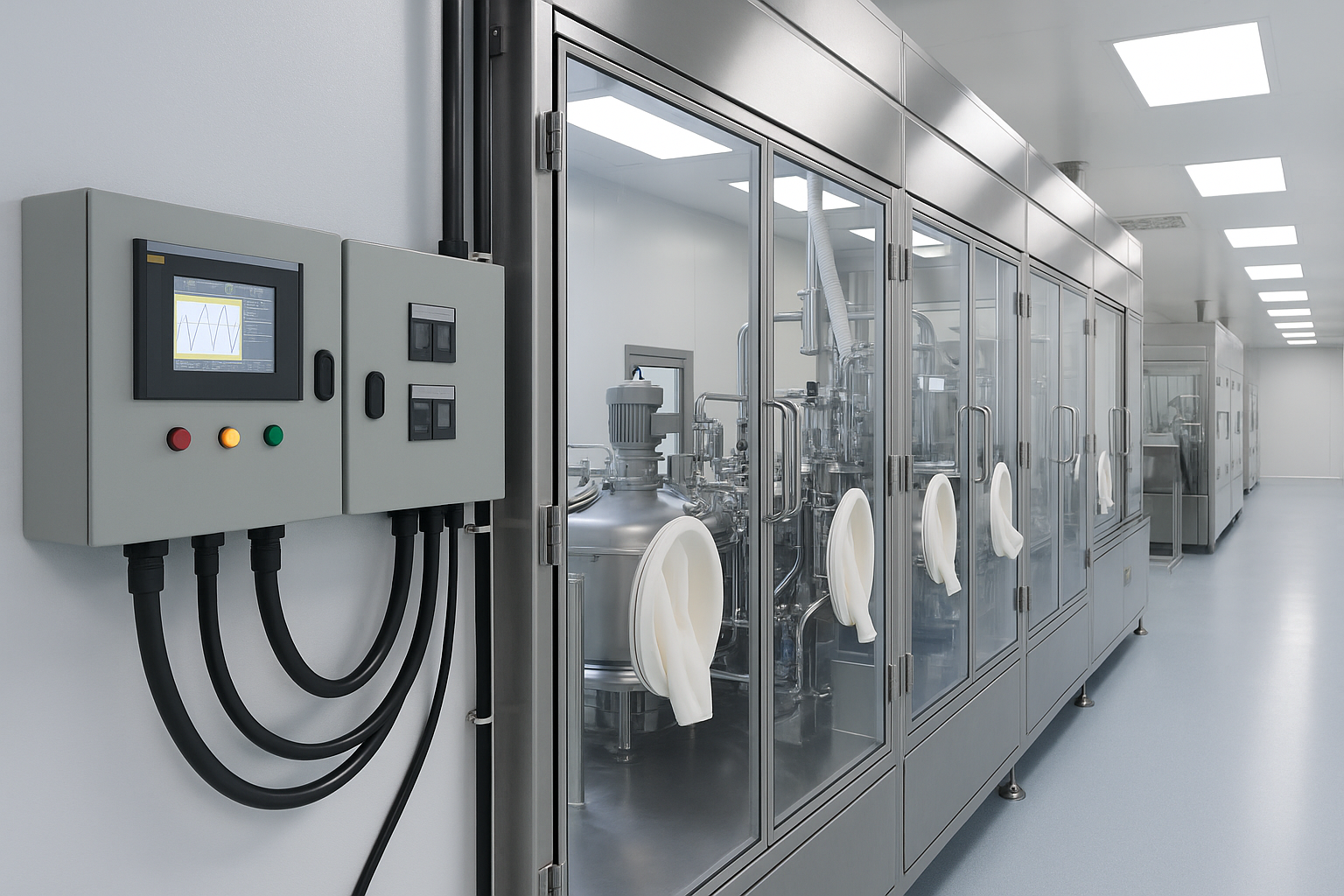
But one crucial variable often goes unchecked:
The quality of electrical power feeding all those precision systems.
The irony?
Pharma plants depend on highly sensitive electronic equipment but operate on electrical networks designed 20 years ago for resistive loads and induction motors.
The result is a growing gap between process precision and power stability.
⚠️ The Real Problems Pharma Facilities Are Facing
These aren’t theoretical — they’re problems your electrical team has likely fought this year.
1. Frequent PLC & Drive Trips — “But We Have a UPS!”
Momentary voltage sags, as short as 30 milliseconds, can reset PLCs, freeze HMI screens, or cause servo drives to fault.
UPS units don’t react fast enough to protect every control circuit, and when they do, harmonics often flow back into the UPS output, making things worse.
Impact: Interrupted batch runs, data loss, alarms, and process restart that compromise validation.
2. HVAC and AHU Motor Failures
Pharma cleanrooms depend on 24×7 HVAC operation for environmental control.
However, harmonic currents from VFDs and SMPS loads cause excessive heating in motor windings and transformers.
Impact:
-
Premature bearing failure.
-
Increased temperature in MCC rooms.
-
Recurrent AHU breakdowns that halt production.
3. Unexplained Sensor & Instrument Malfunctions
Sensitive transmitters, pressure sensors, and analyzers show random errors — often blamed on calibration or network interference.
In reality, ground loops, high-frequency noise, and floating neutrals are corrupting signal integrity.
Impact:
False alarms, skewed data trends, and loss of process reliability, which is devastating during validation or audit.
4. Overheating Panels and MCCs
Even when current levels appear normal, MCCs run hot. Infrared scans show hotspots on neutral links and cables.
The root cause? Harmonic distortion and unbalanced neutral currents.
Impact:
-
Shortened equipment life.
-
Safety hazards from insulation failure.
-
Increased risk of arc faults in critical panels.
5. Automation and SCADA Glitches During Load Transfer
During DG changeover or UPS-to-mains transfer, transient spikes and frequency shifts cause communication dropouts between PLCs and servers.
Impact:
System lockups, reboots, and in some cases, loss of batch data — a serious 21 CFR Part 11 compliance risk.
What Causes These Issues?
-
Non-linear Loads:
Modern pharma equipment — HVAC drives, UPS, VFD-based mixers, chillers — all draw current in pulses, generating harmonics. -
Weak Neutral and Grounding Systems:
Older buildings often have poor equipotential bonding. Sensitive electronics end up with ground potential differences. -
No Continuous Power Monitoring:
Most pharma plants have energy meters, not power quality analyzers. Energy metering doesn’t detect transients, distortion, or imbalance. -
Unplanned Electrical Expansions:
Panels get extended “temporarily” during plant expansions — but those changes often overload cables and disrupt fault coordination.
How Industry Leaders Are Fixing It
Leading pharmaceutical companies are now adopting electrical reliability programs similar to their process quality frameworks:
-
Baseline Power Quality Studies
Using Class-A analyzers to record voltage, current, THD, flicker, and transients over a week — across MCCs, UPS inputs, and AHU panels. -
Harmonic Mitigation & Filtering
Installing active harmonic filters and isolation transformers to protect VFDs and automation panels. -
Grounding & Bonding Optimization
Re-engineering neutral and earth networks to maintain <1 V potential difference between systems — ensuring signal stability. -
Continuous Power Monitoring
Integrating analyzers into SCADA/BMS for live dashboards and event logging — so electrical quality gets the same visibility as process parameters. -
Training & Awareness
Empowering EHS and maintenance teams to interpret PQ data, not just react to breakdowns.
The Payoff
Plants that implemented these measures reported:
-
30–40% fewer equipment failures in HVAC and process drives.
-
Zero batch loss incidents due to PLC resets or power glitches.
-
Reduced downtime during validation and calibration cycles.
-
Improved audit readiness, since electrical integrity is documented and traceable.
Conclusion: Power Quality = Product Quality
Pharma facilities are designed for precision, but precision means nothing without stable, clean, and predictable power.
You wouldn’t tolerate airborne contamination in your cleanroom.
So why tolerate electrical contamination in your control system?
It’s time to treat power quality not as a maintenance metric, but as a quality parameter.
Next Step: Assess Your Plant’s Electrical Health
Get a Pharma Power Health Audit identify hidden power issues before they affect your batches.
Schedule a Project Discussion
Keep your power clean.
Because in pharma, clean power means clean production.