
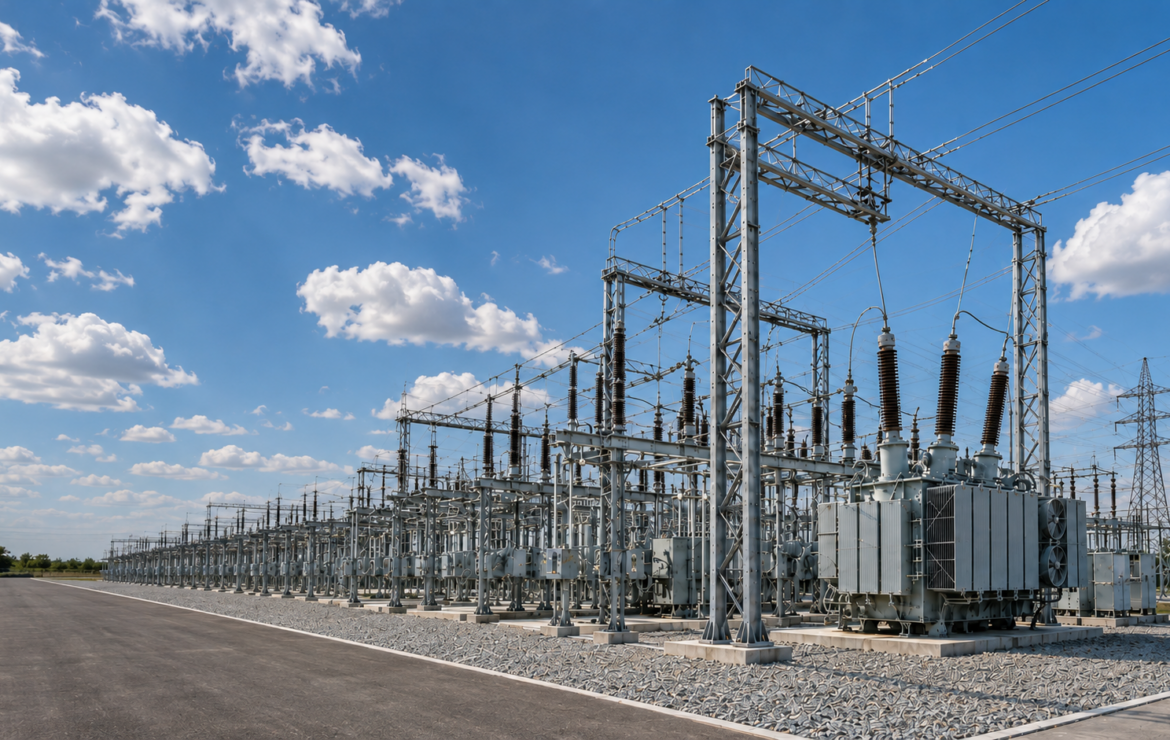
Adding Substation Engineering Capacity Without Losing Design Control!!
Substation engineering capacity rarely becomes a visible concern during initial project planning.
The pressure usually appears later when vendor data, protection requirements, civil inputs and utility comments begin arriving simultaneously. Several packages may be approaching 60%, 90% or IFC milestones while the same internal engineers are expected to review calculations, resolve interfaces and support other active projects.
At that point, adding resources may appear to be the obvious solution.
But additional engineers do not automatically create additional capacity. Without a structured delivery model, they can increase review effort, create interface gaps and transfer more coordination work back to the internal team.
For US utilities and EPC contractors, the real objective is not simply to add engineering hours. It is to increase production capacity while retaining design ownership and technical control.
The real constraint is usually coordination
A substation is developed through connected engineering decisions.
For example, updated transformer vendor data may affect:
- Equipment clearances and layout
- Foundation dimensions and loading
- Oil-containment design
- Cable-entry locations
- Grounding connections
- Protection and control interfaces
Similarly, a change to the transmission-line dead-end location can affect gantry loading, phase spacing, bus geometry, lightning shielding and the overall substation arrangement.
The greatest risk is therefore not that one drawing remains unfinished. It is that a change is incorporated into one deliverable but not propagated across every affected discipline.
This is why outsourcing disconnected drawings or calculations often creates limited value. The internal team may still need to identify interfaces, distribute updated inputs, reconcile inconsistencies and perform extensive checking before accepting the work.
Engineering support must be organized around packages
External support works best when responsibility is assigned by a defined engineering package rather than by individual tasks.
A package should establish:
- Deliverables included in the scope
- Design inputs and assumptions
- Applicable utility and client standards
- Discipline interfaces
- Originator, checker and approval responsibilities
- Review milestones
- Comment-resolution process
- Required software and document formats
For example, a physical-design package might include the general arrangement, plans and sections, bus configuration, equipment supports, grounding interfaces and cable-routing coordination.
The scope should also identify which inputs are provided by the client, which are developed by the engineering partner and which require approval before design can proceed.
This allows the external team to assume responsibility for a controlled portion of the workflow instead of waiting for a sequence of individual instructions.
Stage gates should define technical maturity
The labels 30%, 60%, 90% and IFC are useful only when both teams agree on what each stage represents.
A drawing set can be 60% complete by document count while still lacking the inputs required for meaningful multidisciplinary review.
Before work begins, the project team should define the expected maturity at each stage:
| Stage | Required design maturity |
|---|---|
| 30% | Design criteria, preliminary one-line, equipment arrangement, major interfaces and study assumptions established |
| 60% | Core layouts, calculations, grounding, cable routing and discipline interfaces coordinated |
| 90% | Vendor data incorporated, technical calculations finalized and constructability comments substantially resolved |
| IFC | Drawings, schedules, calculations and material take-offs controlled and construction-ready |
This prevents disagreements about whether a package is ready for review and reduces repeated submission cycles.
Three controls protect design ownership
When adding external engineering capacity, three controls are particularly important.
1. Controlled input register
The register should identify the latest approved utility criteria, survey information, equipment data, fault-current inputs, soil-resistivity data, transmission-line loads and client decisions.
The external and internal teams must work from the same information baseline.
2. Interface register
Critical interfaces should be assigned and tracked rather than left to informal coordination.
Typical interfaces include:
- Vendor dimensions to layout and foundations
- Bus forces to structural design
- CT and VT data to protection design
- Cable terminations to raceway routing
- Transmission-line loads to dead-end structures
- Grounding connections to equipment and structures
3. Traceable review and comment closure
Every package should show who prepared it, who checked it, which comments were received and how those comments were resolved.
The client retains visibility and approval authority without needing to reproduce the engineering work internally.
What should be evaluated before assigning a package?
Before engaging an external engineering team, utilities and EPC contractors should determine whether the team can:
- Work within client CAD, model and document-control standards
- Coordinate physical, grounding, P&C, structural and cable interfaces
- Maintain calculations and drawings from the same approved inputs
- Incorporate vendor data across all affected deliverables
- Support defined 30%, 60%, 90% and IFC milestones
- Integrate with the client’s Engineer of Record and PE review process
- Provide traceable checking and comment resolution
Software proficiency is necessary, but it is not the main differentiator. The stronger indicator is whether the engineering partner can operate within the client’s delivery and governance system.
Capacity should reduce management effort not create more of it
The purpose of external engineering support is not merely to produce more drawings.
It should give the internal team a controlled way to manage peak workloads, parallel projects or discipline-specific shortages without compromising design quality, coordination or ownership.
Elegrow Technology Pvt. Ltd. supports US utilities, EPC contractors, developers and engineering consultants with multidisciplinary substation and switchyard engineering—from 30% design development through IFC package support.
Our engineering environment includes Bentley Open Utilities Substation, MicroStation, Bentley Raceway and Cable Management, ETAP, XGSLab, STAAD.Pro, PLS-CADD and PLS-TOWER.
Planning an upcoming substation package or anticipating a capacity gap?
Discuss your 30%, 60%, 90% or IFC engineering requirements with our team.
Email: dhanshree@elegrow.com
WhatsApp: +91 812827 9173
This version provides stronger ICP value because it gives the reader a practical framework—package ownership, stage maturity, input control and interface management rather than explaining technical services they already understand.
#SubstationEngineering #SubstationDesign #UtilityEngineering #EPCEngineering #ProtectionAndControl #TransmissionAndDistribution #PowerSystemsEngineering