
Solar + BESS Arc Flash Study
AC and DC arc flash assessment for a hybrid solar and battery plant, from PV strings to the 138 kV grid connection.
The project
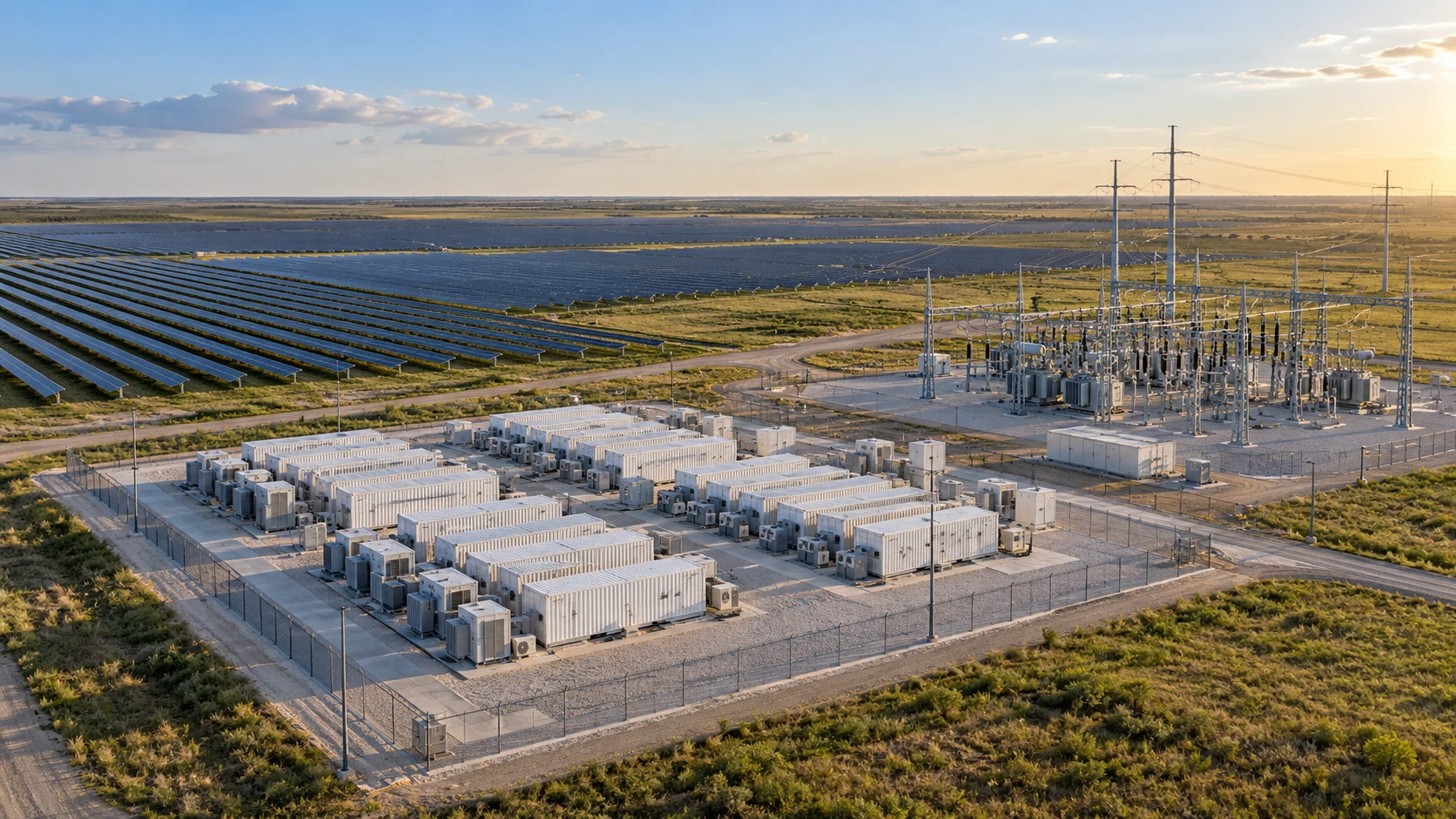
A 200 MWac / 260 MWdc solar plant with a 100 MW / 400 MWh LFP battery system, a 34.5 kV collector network and a 138 kV grid connection in ERCOT.
The scope addressed arc flash exposure, protective-device clearing times and practical mitigation across the plant’s AC and DC systems.
The challenge
PV, battery and grid sources contribute differently to a fault. The assessment needed separate treatment for DC equipment, low-voltage AC and the higher-voltage network.
IEEE 1584 covers three-phase AC from 208 V to 15 kV. DC equipment and higher voltages require separate methods with clearly stated limits.
Five study zones
PV array
Up to 1,500 V DCAssess array behaviour, irradiance and DC protection.
Battery + DC link
1,000–1,500 V DCUse manufacturer fault-current data across state of charge.
Inverter + PCS
600–800 V ACApply IEEE 1584-2018 within its input limits.
Collector system
34.5 kV ACSelect a suitable high-voltage enclosed-arc method.
Substation + POI
138 kV ACAssess open-air exposure using applicable methods.
Study workflow
- Verify single-line diagrams, equipment data and protection settings.
- Build the integrated ETAP model and review AC/DC short circuit and coordination.
- Assess irradiance, battery state of charge and weak/strong grid scenarios.
- Compare applicable methods and evaluate relay, fuse, isolation and maintenance-mode options.
Engineering outputs
- An AC and DC arc flash register for the agreed locations.
- A documented protection review and ranked mitigation plan.
- Equipment labels and task-specific safety inputs.
- A report stating assumptions, method limits and handover requirements.
Owner benefit: One zone-specific assessment scope connects the arc flash register, protection review and mitigation priorities. Equipment data, method limits and responsible engineering review remain essential when interpreting the results.
Planning a similar project?
Share your plant basis, diagrams and energization programme.